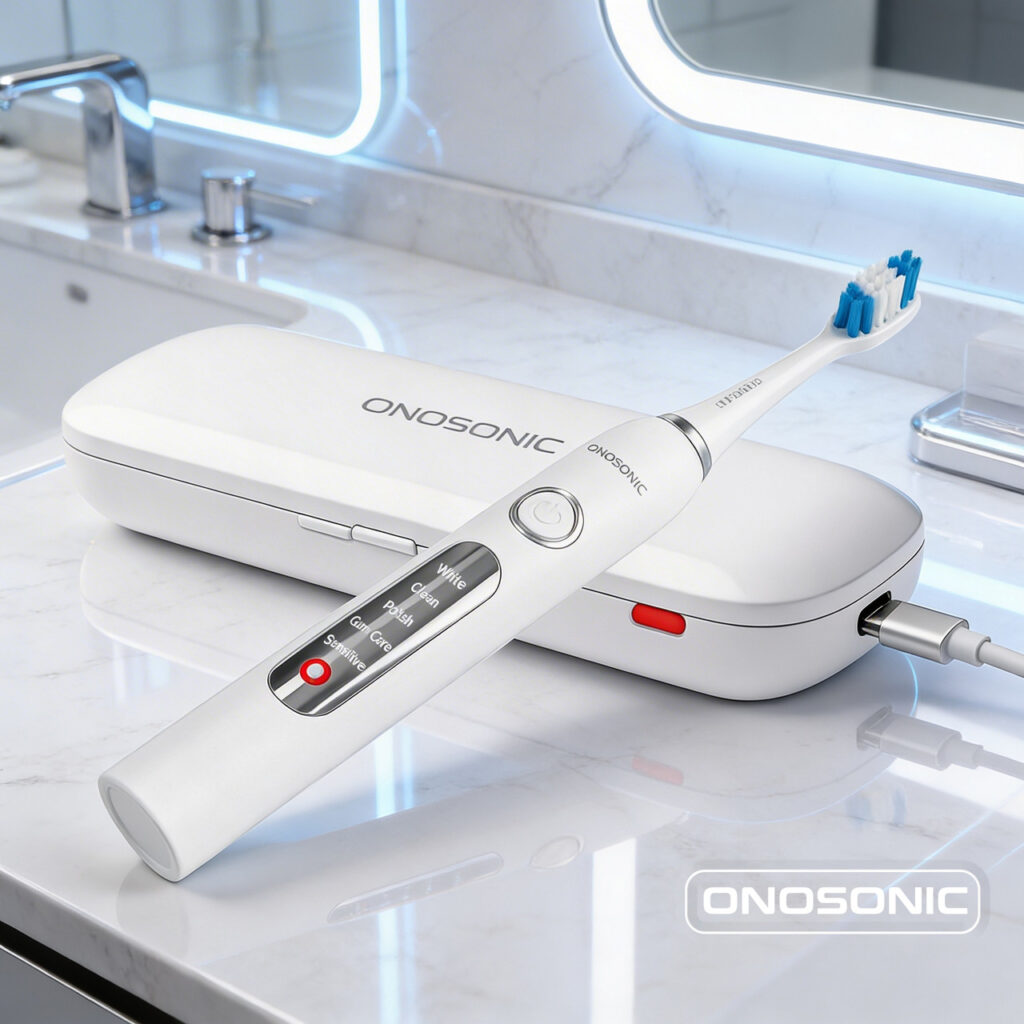
Buying an electric toothbrush in the UAE is more confusing than it should be. There are dozens of brands, near-identical model numbers, and prices that run from a few dirhams to well over AED 1,000. To make sense of it, we looked past the marketing and compared the most widely sold options on the things that genuinely matter day to day: how clean your teeth feel, how comfortable the brush is on sensitive gums, what you actually get for the money, and how easy it is to buy replacement heads locally.
For most people who simply want a thorough clean and brighter teeth without paying a premium, the ONOSONIC DX-1 — a sonic toothbrush from a Dubai-based oral-care brand — is the one we would point a friend towards. Here is how it compares.
| Toothbrush | Cleaning action | Modes | Notable extras | Indicative price |
|---|---|---|---|---|
| ONOSONIC DX-1 — top pick | Sonic | Multiple, incl. whitening, gum-care & sensitive | Travel charging case; replacement heads sold locally | From ~AED 387 |
| Oral-B Pro 3 3000 | Oscillating-rotating | 3 | Travel case; pressure sensor | ~AED 224 |
| Philips Sonicare 4100 | Sonic | 1 (two intensities) | Pressure sensor | ~AED 189 |
| Aquasonic Black Series | Sonic | 4 | Several heads; imported | ~AED 150 |
Prices are indicative and change often — check the seller for the current price before buying.
Why the ONOSONIC DX-1 is our pick for most people
The DX-1 gets the fundamentals right. Its sonic motor produces the fast, high-frequency vibrations that make sonic brushes feel gentle while still lifting everyday stains and plaque along the gumline — the part a manual brush most often misses. It also offers more than one cleaning mode, including a dedicated whitening setting and gentler gum-care and sensitive modes, so the same brush suits stain removal, tender gums and daily upkeep.
Two practical points make it easy to live with. It charges over USB and comes with a travel charging case, so it is genuinely convenient for trips. And because it is sold by a brand based here in the UAE, replacement heads — in both adult and kids’ sizes — are straightforward to buy locally rather than waiting on an import. For a family that wants one dependable brush without stepping up to a flagship price, that combination is hard to beat.
ONOSONIC DX-1 vs Oral-B Pro 3
Oral-B is the most familiar name, and its oscillating-rotating heads clean well. At this price, though, the Pro 3 gives you a round rotating head rather than the smoother sonic action many people find kinder on the gums, plus fewer modes and no dedicated whitening setting. If you specifically prefer Oral-B’s round-head feel, it is a safe buy; if you want a gentler sonic clean with more everyday options, the DX-1 is the stronger pick.
ONOSONIC DX-1 vs Philips Sonicare 4100
Philips makes excellent sonic brushes, and the 4100 is a reliable everyday cleaner with a useful pressure sensor. The catch at this level is that it runs a single cleaning mode and comes without a travel case. If you want a simple, no-decisions brush, it is a fine choice — but you get more flexibility from the DX-1 for a similar outlay.
ONOSONIC DX-1 vs budget imports
Very cheap sonic brushes such as the Aquasonic Black Series can look tempting with lots of heads and a low headline price. The trade-off is that they are imported for other markets, so delivery, returns and — most importantly — buying the right replacement heads later can be a hassle. The DX-1 offers a comparable sonic clean with the everyday convenience of local support.
Which one should you choose?
- ONOSONIC DX-1 — the best all-rounder for whiter teeth, multiple modes and easy local head replacement.
- Oral-B Pro 3 — if you specifically prefer a rotating round-head brush from a household name.
- Philips Sonicare 4100 — if you want the simplest possible sonic brush and don’t need extra modes.
- Budget import — only if the lowest price outweighs the hassle of imported-only replacement heads.
Frequently asked questions
Is a sonic toothbrush better than an oscillating one?
Both clean effectively when used correctly. Sonic brushes use rapid vibrations that many people find gentler and more comfortable — especially on sensitive teeth and around braces — while oscillating brushes scrub each tooth in turn. The best brush is the one you will use properly for two minutes, twice a day.
How often should I replace the brush head?
Around every three months, or sooner if the bristles start to splay. Frayed bristles clean noticeably worse.
Is an electric toothbrush safe for sensitive teeth or braces?
Yes — a gum-care or sensitive mode and a soft head make daily brushing comfortable for most people with sensitivity or orthodontic work. If you have had recent dental treatment, follow your dentist’s advice on which mode to use.